

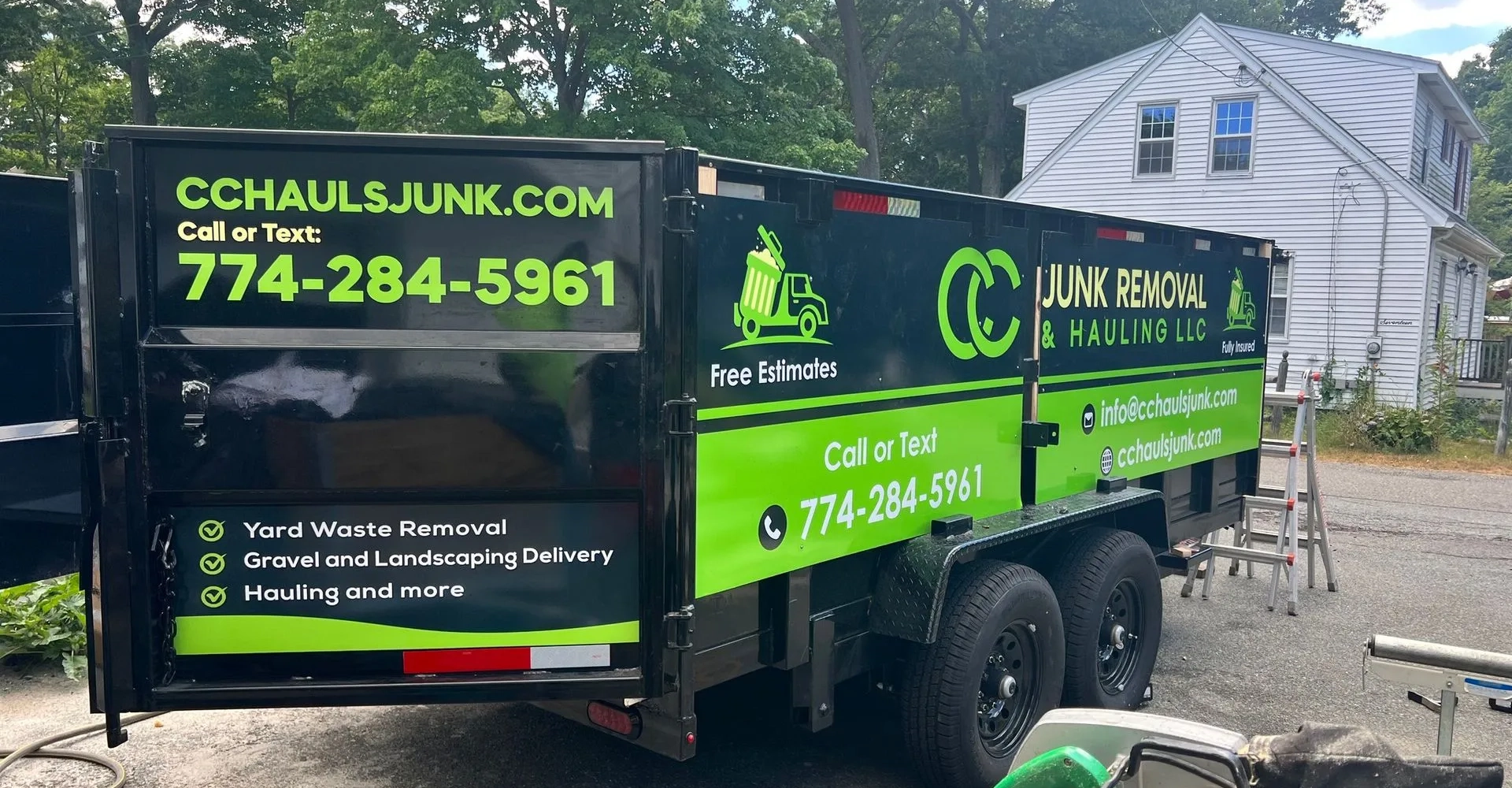
Where do junk removal companies dump the items they haul away? The answer depends on what is being removed and whether it can still be reused or recycled. A load of unwanted items may be separated and sent to donation organizations, recycling facilities, material recovery locations, transfer stations, or approved disposal facilities.
Some materials also require special handling because local or state rules limit how they can be discarded. That means everything in a junk removal truck does not automatically have the same destination.
What Happens to Your Junk After It Is Picked Up?
After pickup, the next step depends on the condition and type of each item. A usable piece of furniture may have a very different destination from broken drywall, an old appliance, or damaged household debris.
The EPA’s waste management hierarchy places source reduction and reuse ahead of recycling and disposal. The agency also identifies donating and reusing items as ways to prevent usable materials from becoming waste.
1. Usable Items May Be Donated
Furniture, household goods, office items, and other belongings that are still in usable condition may be suitable for donation. Donation gives an unwanted item another chance to be used instead of sending it directly into the waste stream.
What can be donated depends on the organization’s needs, condition standards, and available space. Massachusetts residents can find donation and reuse resources through MassDEP’s Donation & Reuse guidance, which encourages giving unwanted but usable items to charities or organizations that can pass them along to others.
2. Recyclable Materials May Go to Recycling Facilities
Items that cannot be reused may still contain materials that can be recovered. Depending on local facilities and acceptance rules, recycling opportunities can exist for metal, cardboard, certain plastics, appliances, construction materials, and other materials.
Recycling only works when the receiving program accepts the material. That is why separating materials matters. For Massachusetts residents, MassDEP provides recycling guidance for many common household materials and alternative recycling programs.
3. Some Loads Go to Transfer or Processing Facilities
Junk does not always travel directly from a property to its final destination. A transfer or processing facility may receive loads before materials move on to recycling, recovery, or final disposal.
This is especially relevant when someone needs to get rid of a lot of junk at once. A garage cleanout, estate cleanout, apartment cleanout, or large property cleanup can contain many different materials, and those materials may not all belong in the same waste stream.
4. Some Materials Ultimately Require Disposal
Not everything can be donated or recycled. Items that are badly damaged, contaminated, or not accepted by available recovery programs may eventually go to an approved landfill or another permitted disposal facility.
The cheapest way to get rid of junk is not always the best way to judge a removal option. A low price does not tell you where the material will go or whether different types of waste are being handled correctly. A better question is what happens to the items after they leave your property.
5. Certain Items Need Special Handling
Some unwanted items cannot simply be mixed into ordinary trash. This is especially important in Massachusetts, where MassDEP’s Waste Disposal Bans restrict several materials from disposal or transfer for disposal, including mattresses, textiles, large appliances, certain construction materials, recyclable paper, metals, leaves, and yard waste.
Mattresses are one example. Massachusetts has banned them from disposal or transport for disposal since November 1, 2022, with limited exceptions, and MassDEP provides separate mattress recycling guidance. Household hazardous waste can also require special collection, and the EPA provides guidance for materials such as paints, solvents, pesticides, batteries, and antifreeze.
Where Common Types of Junk May Go
Type of Item | Possible Destination | What Affects the Decision |
Usable furniture | Donation or reuse | Condition and acceptance rules |
Metal items | Recycling | Material type and local facilities |
Cardboard | Recycling | Cleanliness and local acceptance |
Appliances | Specialized recycling or recovery | Appliance type and state rules |
Mattresses | Mattress recycling program | Condition and local requirements |
Construction debris | Recycling, processing, or approved disposal | Material type |
Damaged household junk | Approved disposal facility | Condition and available recovery options |
Hazardous household material | Special collection facility | Material and local regulations |
Construction debris is a good example of why sorting matters. The EPA notes that construction and demolition materials can include concrete, wood, metals, bricks, glass, plastics, and salvaged building components, and some of these materials can be reused or recycled instead of disposed of.
What Should You Ask Before Hiring a Junk Removal Company?
If you want to get rid of unwanted items in your home, it is reasonable to ask what happens to them after pickup. Clear answers can tell you much more than price alone and help you understand how different materials will be handled.
Useful questions include:
- Do you donate usable items when possible?
- Do you recycle materials that have appropriate recycling options?
- How do you handle mattresses, appliances, or electronics?
- What items can you not accept?
- How do you handle mixed loads?
- Where does material go when it cannot be reused or recycled?
And This Is Why CC Junk Removal Is Different
At CC Junk Removal & Hauling, we do more than make unwanted items disappear. We look for responsible ways to handle what we remove, including donating and recycling suitable items whenever possible throughout Boston, the South Shore, and surrounding Massachusetts communities.
We can help with furniture removal, appliance removal, construction debris, yard debris, garage cleanouts, estate cleanouts, and other qualifying cleanup projects. If you have a large pile or a property that needs to be cleared, give us a call and tell us what you need gone so we can help you move forward without spending your day loading and hauling it yourself.
Frequently Asked Questions
There is no single destination for every load. Where items go depends on what they are, their condition, and the disposal or recycling rules that apply.
When we remove junk in Boston, the South Shore, and surrounding communities, we look for opportunities to:
- Donate suitable items
- Recycle materials when appropriate
- Use proper disposal options for material that cannot be reused or recycled
Massachusetts also has specific waste bans that affect items such as mattresses, appliances, textiles, and certain recyclable materials.
We look for opportunities to donate suitable items rather than automatically treating everything as trash. Whether an item can be donated depends on its condition and whether an appropriate organization can accept it.
If you have furniture or household goods you believe may still be useful, mention that when you contact us. We can consider those items as part of the overall removal job while determining the appropriate way to handle the load.
Yes. We provide larger cleanout services for jobs involving:
- Houses and garages
- Basements and attics
- Estates
- Apartments
- Offices
- Foreclosures
- Tenant and eviction cleanouts
If several rooms or areas need attention, tell us about the whole project when you reach out. Understanding the full scope helps us look at the cleanup as one job instead of treating each unwanted item separately.
We provide furniture removal, appliance removal, and a range of other junk removal services, so a cleanup can involve different types of unwanted items.
Because different materials may need different handling, the easiest approach is to tell us what is in the load. A quick phone conversation can be especially helpful when you have a mix of large items and are unsure what can be removed together.
Tell us what you want removed before the job. We handle many common types of junk, including furniture, appliances, yard debris, construction debris, mattresses, and items from property cleanouts.
Some materials can have special disposal requirements, so we do not recommend assuming every item can be handled the same way. We would rather understand what you have first and give you clear information about the removal.